janma karma ca me divyam
evaṁ yo vetti tattvataḥ
tyaktvā dehaṁ punar janma
naiti mām eti so ’rjuna
“One who knows in truth the transcendental nature of My birth and activities, upon leaving the body, does not take birth again, but attains Me.”
— Śrīmad Bhagavad-gītā 4.9
Janmāṣṭamī is the most auspicious day on which devotees celebrate the appearance of Śrī Kṛṣṇa. Yet there is a profound secret within Kṛṣṇa’s appearance pastime that is not always understood.
It is commonly said that Kṛṣṇa was born in Mathurā, in the prison of Kaṁsa. But the great Gauḍīya Vaiṣṇava ācāryas explain that this is not the complete understanding.
Kṛṣṇa actually took birth in Gokula from the womb of Mother Yaśodā in His original two-armed form as Vrajendra-nandana Śyāmasundara.
At the same time, Vāsudeva-Kṛṣṇa appeared in Mathurā before Vasudeva and Devakī in a four-armed form, resembling Nārāyaṇa. These two manifestations were not two separate Supreme Personalities of Godhead.
The four-armed Vāsudeva-Kṛṣṇa was the opulent manifestation of the original Kṛṣṇa. When Vasudeva brought that child to Gokula, the Mathurā manifestation merged into the original two-armed Kṛṣṇa who had actually been born from Yaśodā.
This is one of the deepest secrets of Janmāṣṭamī.
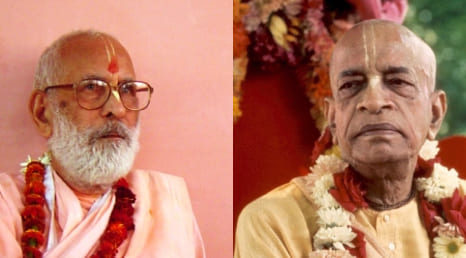
Śrīla Bhaktivedānta Nārāyaṇa Gosvāmī Mahārāja repeatedly emphasized this distinction. He explained that Gokula is the actual birthplace of Kṛṣṇa and that the Kṛṣṇa worshipped by the Gauḍīya Vaiṣṇavas is Vrajendra-nandana Śyāmasundara, the son of Nanda Mahārāja and Yaśodā-devī.
Before entering into the details of the pastime, we should understand an important principle. Kṛṣṇa does not take birth like an ordinary conditioned soul. We are forced to accept a material body according to our karma. Kṛṣṇa is never forced to appear. He is aja, unborn. Therefore, when Kṛṣṇa appears in this world, His appearance is transcendental. Śrī Kṛṣṇa Himself tells Arjuna:
ajo ’pi sann avyayātmā
bhūtānām īśvaro ’pi san
prakṛtiṁ svām adhiṣṭhāya
sambhavāmy ātma-māyayā
“Although I am unborn and My transcendental body never deteriorates, although I am the Lord of all living beings, I appear by My own internal potency.”
Kṛṣṇa therefore does not become bound by material nature. Rather, material nature becomes subordinate to His internal potency, Yogamāyā. His appearance is therefore called āvirbhāva—a divine manifestation. But within this divine appearance, there is an even deeper distinction between Mathurā and Gokula.
King Kaṁsa had become one of the greatest tyrants of his time.
When he was driving the chariot carrying his sister Devakī and her husband Vasudeva after their marriage, an invisible voice announced:
“The eighth child of Devakī will be the cause of your death.” Kaṁsa immediately became terrified. He wanted to kill Devakī, but Vasudeva persuaded him to spare her by promising to deliver each child born to them. Kaṁsa accepted this promise, but his heart became consumed by fear. Vasudeva and Devakī were imprisoned. One after another, their children were born. And one after another, Kaṁsa killed them.
The whole atmosphere became oppressive. The earth was burdened by demoniac rulers, and the devotees prayed for the appearance of the Supreme Lord. Kṛṣṇa was about to appear.
The eighth lunar day of the dark fortnight had arrived. It was midnight. The prison of Kaṁsa was silent. Vasudeva and Devakī were bound and surrounded by guards.
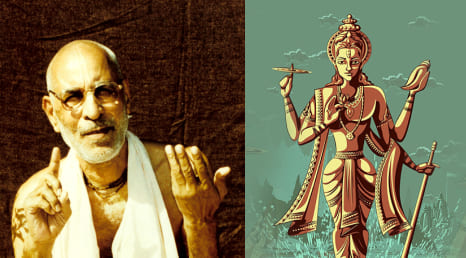
But throughout the universe, auspicious signs appeared. The demigods offered prayers. The celestial atmosphere became peaceful. The rivers became clear. The flowers blossomed. The winds became gentle. And then something extraordinary happened. Śrī Kṛṣṇa appeared before Vasudeva and Devakī. But He did not appear as an ordinary baby. He appeared in a magnificent four-armed form. He had a crown. He had ornaments. He had long, beautiful hair.
He held the conch, disc, club and lotus. He manifested as a youthful, majestic form resembling Nārāyaṇa. This was Vāsudeva-Kṛṣṇa. The Śrīmad-Bhāgavatam describes Vasudeva and Devakī offering prayers to the Lord after seeing this extraordinary manifestation. But there is an important point: Kṛṣṇa did not take birth from Devakī in the ordinary sense. He manifested before Vasudeva and Devakī.
Śrīla Bhaktivedānta Nārāyaṇa Gosvāmī Mahārāja explained that a sixteen-year-old, fully ornamented, four-armed personality cannot be understood as an ordinary newborn emerging from a mother's womb. In Mathurā, Kṛṣṇa appeared in this divine form.
While this extraordinary manifestation was taking place in Mathurā, another event had already occurred in Gokula. In the home of Nanda Mahārāja and Yaśodā-devī, Mother Yaśodā had given birth to a beautiful two-armed baby boy.
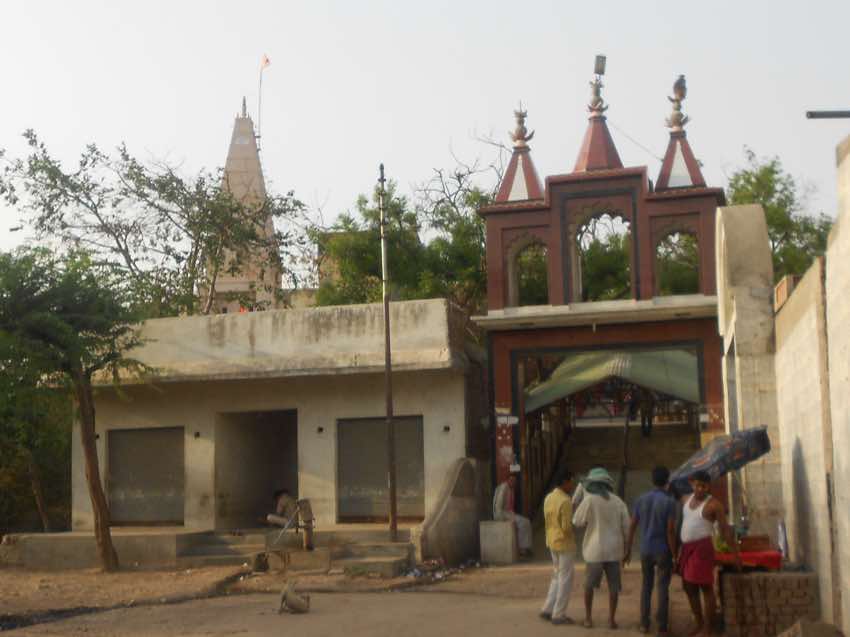
This was not merely Vāsudeva-Kṛṣṇa appearing somewhere else. This was Vrajendra-nandana Śyāmasundara—the original Kṛṣṇa. He had taken birth from the womb of Mother Yaśodā. He was a newborn baby. He had two arms. He had no crown. He had no weapons. He was not holding a conch, disc, club or lotus. He appeared like an ordinary beautiful baby boy.
Śrīla Bhaktivedānta Nārāyaṇa Gosvāmī Mahārāja described the distinction very clearly: In Mathurā, Kṛṣṇa appeared as a fully developed, four-armed, ornamented manifestation. In Gokula, Kṛṣṇa actually took birth as a two-armed baby from Yaśodā. This is why Gokula is called Kṛṣṇa's birthplace.
This distinction is extremely important. We can therefore say:
Kṛṣṇa appeared.
Kṛṣṇa was born. The four-armed manifestation was Vāsudeva-Kṛṣṇa, the opulent manifestation. The two-armed child was Vrajendra-nandana Kṛṣṇa, Svayaṁ Bhagavān Śyāmasundara.
Śrīla Nārāyaṇa Gosvāmī Mahārāja explained that the Mathurā manifestation is vaibhava-prakāśa, whereas the two-armed Kṛṣṇa in Gokula is the original Vrajendra-nandana.
This is why the Gauḍīya Vaiṣṇavas especially worship: Vrajendra-nandana Śrī Kṛṣṇa.
When Devakī and Vasudeva saw the four-armed Lord, they immediately understood His divine identity. They knew: “This is the Supreme Lord Himself.” They offered prayers to Him. But Devakī was also afraid. She knew Kaṁsa was searching for the child who would kill him. She therefore requested the Lord to hide His divine form. She wanted Him to appear as a helpless little baby with two arms. Kṛṣṇa agreed.
But here the mystery becomes even deeper. The two-armed Kṛṣṇa who had already been born from Yaśodā was the original Vrajendra-nandana.
Upon hearing the prayers of Vasudeva and Devakī, that original two-armed Kṛṣṇa manifested there, and the four-armed Vāsudeva-Kṛṣṇa entered and merged into Him.
Thus the two manifestations became one.
Śrīla Nārāyaṇa Gosvāmī Mahārāja explained that when Vasudeva later carried the baby to Gokula, the Vāsudeva-Kṛṣṇa manifestation merged into the original two-armed Kṛṣṇa lying on Yaśodā's bed.
The prison doors opened. The chains binding Vasudeva fell away. The guards became unconscious. Vasudeva took the baby Kṛṣṇa in his arms and began the journey from Mathurā to Gokula. It was raining heavily. The Yamunā was swollen. But nothing could obstruct the Lord's plan. Ananta Śeṣa accompanied Vasudeva and spread His hoods over Kṛṣṇa to protect Him from the rain. Vasudeva crossed the Yamunā. He entered Gokula.
And he came to the house of Nanda Mahārāja and Yaśodā-devī. There, he placed the baby Kṛṣṇa on Yaśodā's bed.
At that moment, the Vāsudeva manifestation that Vasudeva had carried from Mathurā merged into the original two-armed Vrajendra-nandana Kṛṣṇa.
Vasudeva then took the newborn girl, Yogamāyā, and carried Her back to Mathurā. This is the real secret behind the exchange of the children.
The Śrīmad-Bhāgavatam and the explanations of the ācāryas reveal another important point. Mother Yaśodā gave birth to two children: First, Kṛṣṇa. Then, shortly afterward, Yogamāyā. Because Yaśodā was exhausted from childbirth, she was not fully conscious of the details. When Vasudeva arrived, he placed Kṛṣṇa beside her and took Yogamāyā. Later, when Kaṁsa tried to kill the baby girl, She slipped from his hands and revealed Her divine form as Durgā.
She announced: “The person who will kill you has already taken birth elsewhere.” Kaṁsa was bewildered. He had been waiting for Devakī's eighth child. But Kṛṣṇa was already safely in Gokula.
Now the Kṛṣṇa who remained in Gokula was Yaśodā-nandana. He was Yaśodā's son. He was Nanda Mahārāja's son. He was Vrajendra-nandana. He was the beautiful Śyāmasundara who would perform His childhood pastimes in Vraja. And this is a crucial point. He did not remain there as a four-armed manifestation. He remained as a two-armed little boy. He was treated like a normal child. His mother would feed Him. She would bathe Him. She would dress Him.
She would put Him to sleep. She would become anxious when He wandered away. She would chastise Him when He was naughty. She would eventually chase Him with a rope. This is the sweetness of Vraja.
The Śrīmad-Bhāgavatam gives us very powerful evidence concerning Kṛṣṇa's birth in Gokula. When Nanda Mahārāja learned that his son had been born, he became overwhelmed with happiness. He invited learned brāhmaṇas. He bathed and purified himself. He arranged for auspicious Vedic mantras to be recited. He performed the jāta-karma birth ceremony for his son. He worshipped the forefathers and demigods. And he gave immense charity.
This celebration became known as Nandotsava. This is significant. Vasudeva and Devakī could not celebrate a birth ceremony in Kaṁsa's prison. They were imprisoned. They were surrounded by fear. But Nanda Mahārāja celebrated the birth of his son with tremendous joy. The actual joy of Kṛṣṇa's birth belongs to Gokula.
The Gokula Kṛṣṇa had none of the external signs of the majestic Mathurā manifestation. No crown. No four arms. No weapons. No divine display of majesty. He was a tiny baby. He cried. He slept. He was carried by His mother. He was cared for by the residents of Vraja.
Śrīla Nārāyaṇa Gosvāmī Mahārāja emphasized this contrast: the Mathurā manifestation appeared as a sixteen-year-old youth with ornaments and four arms, whereas the Gokula Kṛṣṇa appeared as an ordinary newborn baby.
And because He was treated as a normal Vraja child, His childhood saṁskāras and ceremonies were performed there. The Bhāgavatam specifically describes Nanda Mahārāja arranging Kṛṣṇa's jāta-karma ceremony according to Vedic regulations. Later, Garga Muni performed the nāma-karaṇa, or name-giving ceremony, for Kṛṣṇa and Balarāma.
Thus the Supreme Personality of Godhead allowed Himself to be completely covered by Yogamāyā so that His devotees could experience Him in the sweetness of an intimate family relationship.
Why is this distinction so important? Because there are two different moods. In Mathurā, Vasudeva and Devakī see: “He is Bhagavān.” They fold their hands. They offer prayers. They are filled with awe. But in Gokula, Yaśodā sees: “He is my son.” She does not worship Him from a distance. She does not stand before Him with folded hands. She picks Him up. She feeds Him. She kisses Him. She scolds Him. She worries about Him.
She binds Him. This is the astonishing sweetness of vātsalya-rasa.
Śrīla Nārāyaṇa Gosvāmī Mahārāja repeatedly explained that the Vrajavāsīs' conception of Kṛṣṇa is covered by such deep love that His Godhood is not the focus of their relationship. Even when they are reminded of His extraordinary powers, Nanda Mahārāja insists that Kṛṣṇa is still his son.
Once Kṛṣṇa lifted Govardhana Hill, the elder residents of Vraja began discussing His extraordinary power. Some said: “Perhaps He is Nārāyaṇa Himself.” But Nanda Mahārāja did not accept this as the basis of his relationship with Kṛṣṇa. For him, whatever Kṛṣṇa might be, He was still his son. This is the power of Yogamāyā.
The Supreme Lord, before whom all creation bows, becomes the little boy whom Yaśodā can chastise. The Supreme Lord who controls the universe allows Himself to be bound by His mother's rope. The Supreme Lord who is worshipped by Brahmā and Śiva cries for His mother's milk. This is not a limitation imposed upon God. It is the perfection of His sweetness.
The Gauḍīya Vaiṣṇava tradition therefore places special emphasis on Vrajendra-nandana Kṛṣṇa.
Śrīla Nārāyaṇa Gosvāmī Mahārāja explained that the Kṛṣṇa who appeared in Mathurā was not the original Vrajendra-nandana Śyāmasundara. He was the vaibhava-prakāśa, the opulent manifestation of Kṛṣṇa.
The original Kṛṣṇa is the son of Nanda Mahārāja. He is Yaśodā-nandana. He is Nanda-nandana. He is Vrajendra-nandana. He is Śyāmasundara. This is expressed in the famous Gauḍīya conclusion:
ārādhyo bhagavān vrajeśa-tanayas
tad-dhāma vṛndāvanam
“The son of Nanda Mahārāja, the Lord of Vraja, is the supreme worshipable Lord, and His abode is Vṛndāvana.” For the Rūpānuga Vaiṣṇava, this is the heart of Janmāṣṭamī.
When we celebrate Janmāṣṭamī, we naturally remember the prison of Kaṁsa. We remember Vasudeva. We remember Devakī. We remember the four-armed appearance. We remember the opening of the prison doors. We remember Vasudeva crossing the Yamunā. All of these are essential parts of the pastime. But the culmination is Gokula.
The heart of the festival is the appearance of Yaśodā-nandana. The four-armed Vāsudeva-Kṛṣṇa manifestation ultimately merges into the two-armed Kṛṣṇa who has taken birth from Yaśodā. Therefore, the devotee's meditation should travel from Mathurā to Gokula. From awe to sweetness. From majesty to intimacy. From Devakī-nandana to Yaśodā-nandana. From Vāsudeva-Kṛṣṇa to Vrajendra-nandana Śyāmasundara.
Why is the two-armed form so important? Because those two arms are the arms that embrace His devotees. They are the arms of the little boy who runs into Yaśodā's lap. They are the arms that hold a stick when Kṛṣṇa goes to herd the cows. They are the arms that play the flute. They are the arms that lift Govardhana. They are the arms of Śyāmasundara.
The four-armed form reveals: “I am the Supreme Lord.” The two-armed Vraja form reveals something even sweeter: “I am yours.” This is the secret of Vraja-bhakti.
The story is not merely something to remember once a year. It teaches us how Kṛṣṇa wants to be approached. The Mathurā devotees approach Him with awe. The Vrajavāsīs approach Him with love. And the Gauḍīya Vaiṣṇava tradition teaches us to aspire for the service of those devotees of Vraja.
Therefore Janmāṣṭamī should inspire us to increase: śravaṇam — hearing Kṛṣṇa-kathā, kīrtanam — chanting the holy name, smaraṇam — remembering Kṛṣṇa, arcana — worshipping Him, vaiṣṇava-sevā — serving His devotees, and sincere prayer for rāgānugā-bhakti under the guidance of Śrī Guru and the Rūpānuga Vaiṣṇavas. The external celebration is valuable, but its purpose is to awaken remembrance.
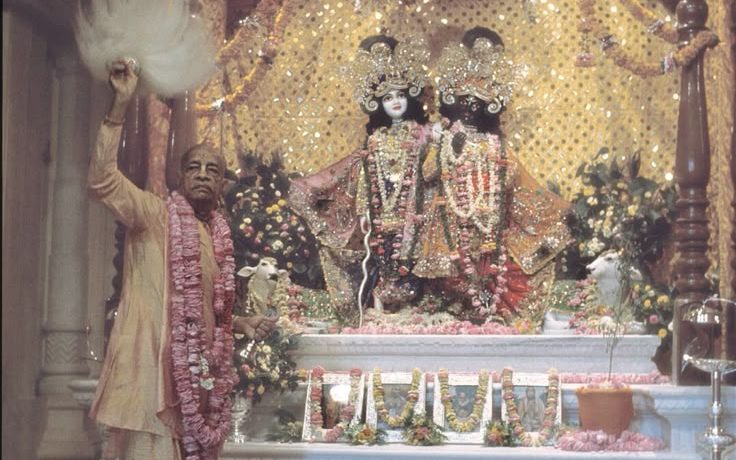
At midnight, devotees gather. The kīrtana becomes increasingly intense. The temple becomes decorated. The Deity is worshipped. Śrīmad-Bhāgavatam is recited. The devotees remember the divine appearance of Kṛṣṇa. And at midnight, we joyfully announce: “Śrī Kṛṣṇa has appeared!” But as we celebrate, let us remember the deeper meaning. Kṛṣṇa has not appeared merely to destroy Kaṁsa.
He has not appeared merely to restore religious principles. He has appeared to taste and distribute transcendental love. And His highest sweetness is revealed in Vraja.
The day following Janmāṣṭamī is Nandotsava. Why is it called Nandotsava? Because Nanda Mahārāja was overwhelmed with happiness at the birth of his son. He gave charity. He invited brāhmaṇas. He performed auspicious ceremonies. The Vrajavāsīs came with milk, yogurt, butter and other offerings. Everyone was celebrating. This was not the atmosphere of a prison. There was no fear. There were no chains. There were no guards.
There was only happiness. Kṛṣṇa had become the son of Nanda and Yaśodā.
The Bhāgavatam describes Nanda Mahārāja's birth ceremony and the tremendous celebration that followed, which became known as Nandotsava.
There is also an internal lesson. Kaṁsa's heart was filled with fear, hatred and violence. Nanda Mahārāja's heart was filled with love. Where Kṛṣṇa appeared, everything became auspicious.
Therefore, Janmāṣṭamī invites us to ask: “What is the condition of my heart?” Is it filled with Kaṁsa-like qualities? Fear? Anger? Envy? Pride? Desire for control? Or are we cultivating the qualities of the devotees of Vraja? Humility? Service? Affection? Faith? Attachment to hari-nāma? Love for the Vaiṣṇavas? Kṛṣṇa's appearance day is therefore an opportunity for purification.
We should pray: “O Kṛṣṇa, please appear within my heart.” Not merely as an idea. Not merely as philosophical knowledge. But as the object of genuine loving service.
We may decorate the temple. We may prepare hundreds of preparations. We may fast until midnight. We may sing for hours. We may perform abhiṣeka. All of these are wonderful. But the deepest celebration is to become more attached to Kṛṣṇa and His devotees. Let our fasting increase our chanting. Let our chanting increase our remembrance. Let our remembrance increase our service. Let our service purify our heart. And let our heart become a place where Kṛṣṇa is lovingly remembered.
Let us therefore remember Kṛṣṇa's appearance in the proper sequence. In Gokula, Mother Yaśodā gave birth to the original two-armed Kṛṣṇa, Vrajendra-nandana Śyāmasundara. In Mathurā, Kṛṣṇa appeared before Vasudeva and Devakī in His four-armed Vāsudeva form. Vasudeva and Devakī prayed to Him. The original two-armed Kṛṣṇa manifested there. The four-armed Vāsudeva-Kṛṣṇa manifestation merged into that original two-armed Kṛṣṇa.
Vasudeva then carried the child to Gokula. There he placed Kṛṣṇa beside Yaśodā. He took Yogamāyā back to Mathurā.
And from that moment, Kṛṣṇa remained in Gokula as Yaśodā-nandana, performing His childhood pastimes as the beloved son of Nanda and Yaśodā.
This is the profound secret of Janmāṣṭamī. Kṛṣṇa's majesty was revealed in Mathurā. Kṛṣṇa's sweetness was revealed in Gokula. And the Gauḍīya Vaiṣṇavas aspire to serve that sweet Vrajendra-nandana Śyāmasundara.
On this sacred appearance day, let us pray: O Śrī Kṛṣṇa, You who appeared in Mathurā before Vasudeva and Devakī, You who actually took birth in Gokula from the womb of Mother Yaśodā, You who became the darling son of Nanda Mahārāja, You who are the life of the Vrajavāsīs, You who are the original Vrajendra-nandana Śyāmasundara— Please remove the darkness from our hearts. Please give us taste for Your holy name.
Please give us the association of pure Vaiṣṇavas. Please allow us to hear Kṛṣṇa-kathā from the lips of those who truly love You. Please free us from false pride and selfish desire. Please engage us in the service of Śrī Guru and the Vaiṣṇavas.
And by the mercy of Śrī Rūpa Gosvāmī, Śrī Raghunātha dāsa Gosvāmī, Śrī Caitanya Mahāprabhu, and the Rūpānuga ācāryas, please grant us even a particle of devotion to the lotus feet of the beloved son of Nanda and Yaśodā.
Jaya Śrī Kṛṣṇa Janmāṣṭamī! Jaya Nanda-nandana! Jaya Yaśodā-nandana! Jaya Vrajendra-nandana Śyāmasundara! Jaya Śrī Rādhā-Kṛṣṇa! Jaya Śrī Guru-Gaurāṅga!
Hare Kṛṣṇa! Hare Kṛṣṇa!
Kṛṣṇa Kṛṣṇa! Hare Hare!
Hare Rāma! Hare Rāma!
Rāma Rāma! Hare Hare!
The central theological distinction presented above follows the explanations of Śrīla Bhaktivedānta Nārāyaṇa Gosvāmī Mahārāja, particularly his discourses on Kṛṣṇa's appearance and Gokula Mahāvana.
The principal references include:
Śrīmad-Bhāgavatam, Tenth Canto, Chapters 3–5 — Kṛṣṇa's appearance, Vasudeva's journey to Gokula, Yogamāyā's appearance, Nanda Mahārāja's birth ceremony and Nandotsava.
Śrīla Bhaktivedānta Nārāyaṇa Gosvāmī Mahārāja — A Gokula–Antardvīpa Parikrama — explaining Gokula as Kṛṣṇa's birthplace, the four-armed Mathurā manifestation, and its merging into Vrajendra-nandana Śyāmasundara.
Śrīla Bhaktivedānta Nārāyaṇa Gosvāmī Mahārāja — The Appearance Day of Śrī Nityānanda Prabhu — explaining the simultaneous appearance of the four-armed Mathurā manifestation and two-armed Yaśodā-nandana in Gokula.
Kṛṣṇa — Lord of Sweetness — detailed explanation of Kṛṣṇa's appearance in Mathurā and actual birth in Gokula.
Kṛṣṇa Teaches Through His Pastimes — explanation of Kṛṣṇa's ordinary two-armed baby form in Gokula and the merging of the Mathurā manifestation.
Śrī Caitanya-caritāmṛta, Madhya-līlā 20 — the theological understanding of Kṛṣṇa's four-armed expansions and their relationship to the original Kṛṣṇa.